Thursday, June 14, 2018

House of the Stone Carpets, Ravenna

The core set of elaborately glittering golden mosaics in Ravenna are indubitably the most famous, but they are not the only show in town. We also visited the so-called "Stone Carpets", a set of Roman/Byzantine mosaics with a backstory almost as fabulous as the mosaics themselves.

You reach the House of the Stone Carpets via the next-door church of Saint Eufemia. There, you pass underground, three metres below current ground level, to an excavated Byzantine palace which was only discovered in 1993 during the (attempted) construction of an underground garage. Covering around 1200 sq metres, the 14 rooms and three courtyards of the small palace are covered with intricately patterned "carpets" in stone, as well as a couple of stand-out figurative mosaics. The mosaics were restored and the returned to their original location, albeit now in a modern excavation space that allows visitors to walk "through" the house on raised platforms. It only opened to the public in 2002.

It was peaceful and not crowded when we visited (luckily, otherwise it might be unpleasant to have to queue along the platforms), probably because it is less known, less flashy than the main sites, and not included in the combination ticket to the religious buildings. It's a nice chance to see a secular building with a more intimate and low-key mosaic decoration.

The dance of the seasons


Lighting didn't quite work out for a photo with the dancing mosaic


Christ as the Good Shepherd. This is apparently quite different from the standard representation, although none of the sites I've consulted say how exactly. I would guess his very youthful, countrified appearance


Monday, June 11, 2018

Archbishop's Palace, Ravenna

Our last stop on the mosaic trail was at the Archbishop's Palace, now a museum, which contains a tiny oratory dedicated to St Andrew from around 495 AD. Photos were not allowed in here, so I took a couple anyway (sorry).


A militant Christ trampling the beasts
The rest of the museum contains a bit of a hodgepodge of various paintings, mosaic fragments, ivories, statues etc. To be honest, I didn't find it all that memorable, but I enjoyed looking back through my photos and remembering what there was to see there. 

One highlight is the reconstructed chapel frescoes by da Rimini, from the church of Santa Chiara (early 14th century)


The lighting and damage made them hard to photograph, but they had a delicate beauty


As usual, I also enjoyed taking photos of various quirky objects:

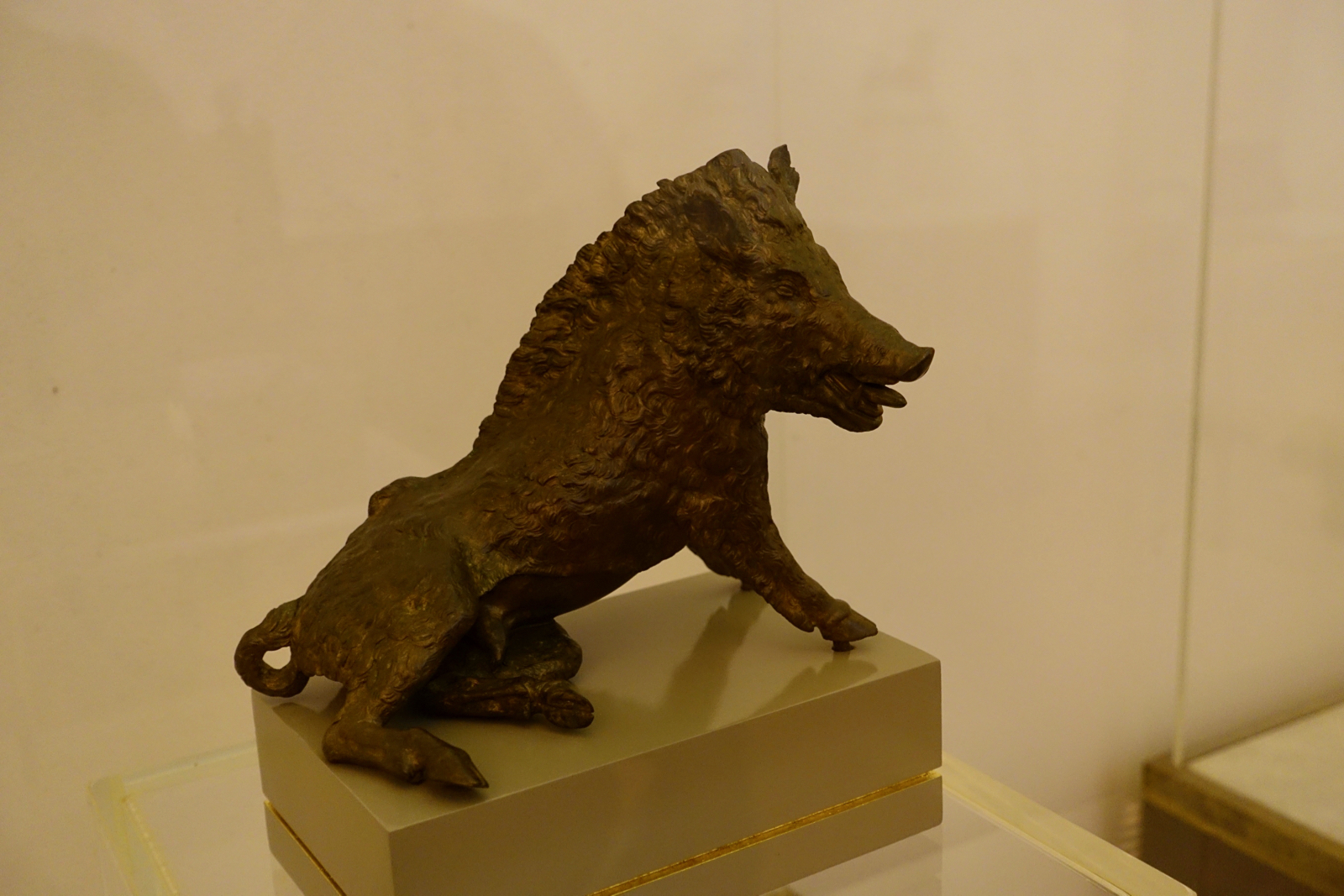
Sexy boar
Sexy mermaid (hello Starbucks)

'Tis but a scratch
Pharmacy reconstruction

Wolf infestation


I didn't take any pictures of one of the glories of the museum, the ivory throne of Archbishop Maximianus (who showed up in the San Vitale mosaics), and the internet doesn't seem to have many pictures of it either, but it's pretty special:

Source

Saturday, June 02, 2018

Imperial splendour: the Basilica of San Vitale, Ravenna

Just next to the Mausoleum of Galla Placida is the Basilica of San Vitale. It's the most cathedral-ly in feeling of all the mosaic sites we visited, thanks to its proportions and size. Construction began in 526, under the rule of the Goths, but was completed in 548, by which time Ravenna was part of the Byzantine Empire, something which is clearly reflected in its beautiful mosaics. I put about a million photos of it below because it's so pretty, especially in the chancel area above the altar.


Exterior of San Vitale by night
Abel and Melchizedeck offering sacrifices to the Lord

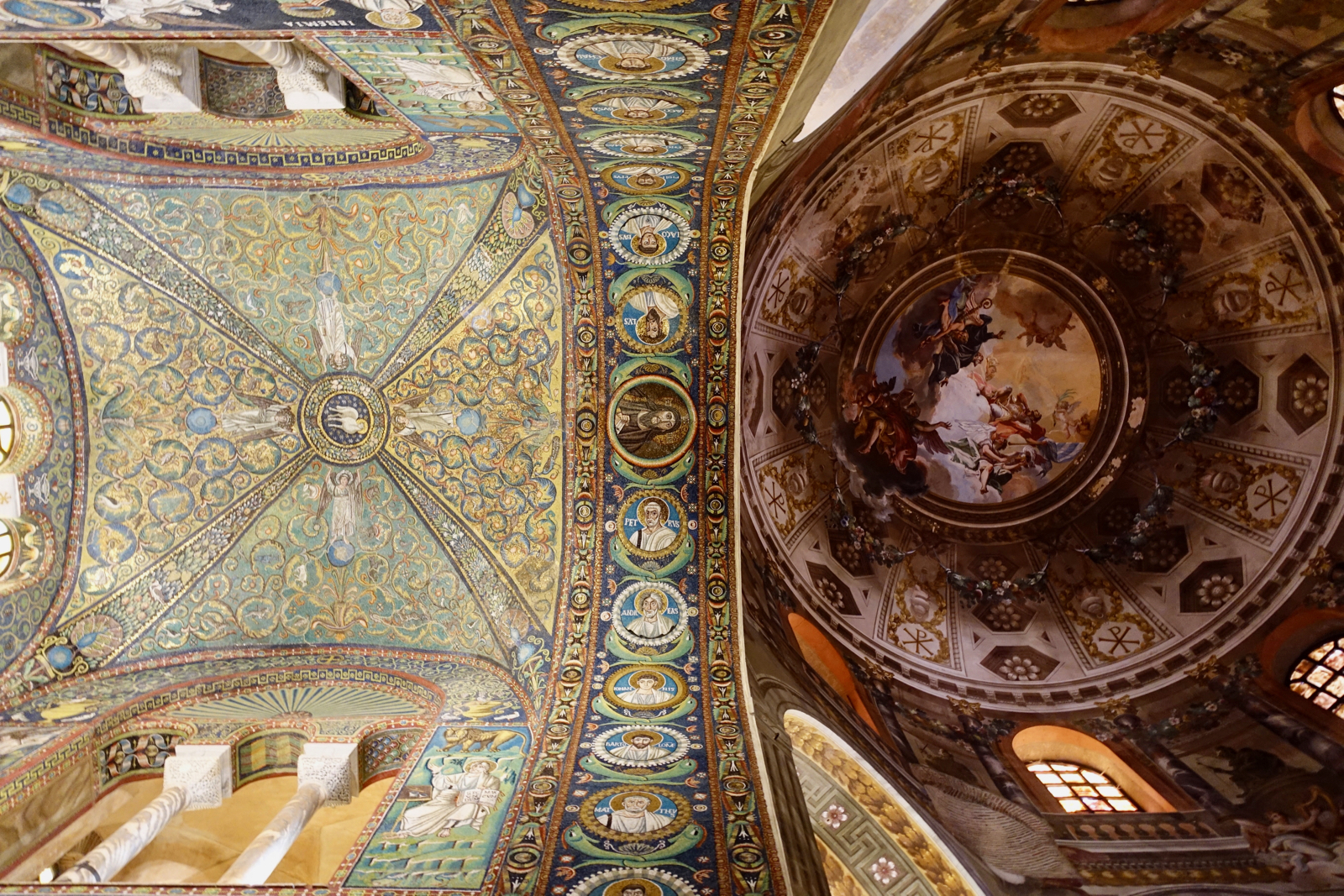
The cupola on the right is the only substantial part of the Basilica which has been redecorated. It provides an interesting contrast to the rest of the Byzantine interior. The arch between the two has a central medallion of a bearded Jesus, flanked by the Apostles and two other saints

The vault shows the Lamb of God in the centre, supported by four angels against a background of vines and small animals on a blue, green and gold ground


Two horses prepare to fight to death for possession of the cross


Note the peacock beautifully fit into the co


The whole Basilica glowed with a soft yellow light reflecting off the marble on the floor and walls


Isaiah below a depiction of the evangelist Mark with his lion

The central mosaic over the altar shows a younger-looking Christ, with the church's namesake, Saint Vitale, on his right, and the founder of the church, Bishop Ecclesius, on his left. Christ offers a martyr's crown to St Vitale, but it can also be interprested as an offering to the Emperor Justinian below him

I didn't manage to get a great shot because of the angles, but bottom right depicts the Byzantine Emperor Justinian and his court. He is flanked by church and civil officials, representing his central authority in both realms. However, the Bishop Maximianus, on Justinian's left is actually standing slightly in front of the Emperor, perhaps reflecting tension between Church and State. Justinian is carrying a bowl of bread for the Eucharist, implying they are processing in to the Mass at the altar

There was a moody, Russian-looking model doing a photo shoot in this area when we visited. Here's my attempt


The angels above the arch, holding a medallion, are flanked by depictions of the City of Jerusalem, representing the Jewish/Old Testament Church, and the City of Bethlehem, for the Gentile/New Testament Church


Moses and the burning bush (top) and watching his flocks (bottom)


Abraham offers bread to the "mysterious strangers" (angels), before having a go at sacrificing Isaac. Above, Jeremiah stands on the right, and Moses ascends Mt Sinai on the right. Below Moses is Aaron with the Twelve Tribes of Israel


Facing Justinian is his wife, the Empress Theodora, and her court. She holds the cup for the Eucharist and the bottom of her gown features an embroidery of the three Magi bearing gifts, thus associating herself with these Biblical kings