Thursday, November 03, 2016

La Martorana, a study in contrasts

I was an exceptionally busy bee on my third day in Palermo. After the Palatine Chapel, Norman Palace and the cathedral including roof visit, I still had the energy to visit another of Sicily's mosaicked masterpieces, namely Santa Maria dell'Ammiraglio, aka La Martorana.


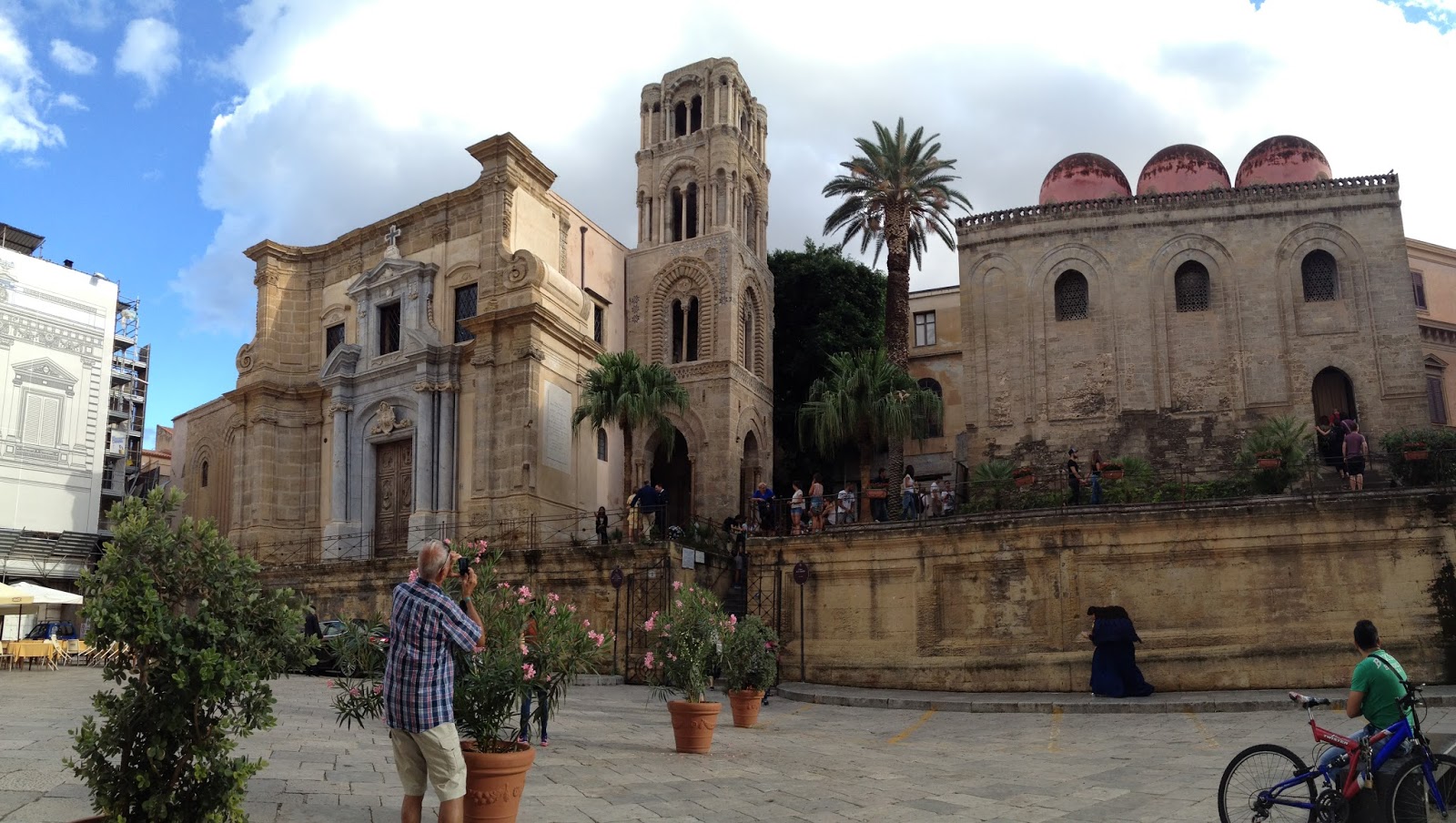
Outside La Martorana (on a different day)

La Martorana on the left, Chiesa di San Cataldo on the right

Well, actually, I meant to visit La Martorana, but got confused and first went to the church right next door, the Chiesa di San Cataldo. I had been past San Cataldo before, and there always seemed to be a queue of people waiting to go in (as in the photo above), so I assumed it was the right place. They have a little curtain across the door for the express purpose of tricking people into paying the entrance fee, since inside it is tiny and empty. The outside is cool, but there really is nothing to see in there.

The sparse interior of San Cataldo
I sat down for a few moments to get my 2.50€ worth before heading next door to my intended destination. La Martorana is certainly quite the contrast after the bare walls of San Cataldo. Founded in 1143, it is a complete mishmash between the original Arab-Norman style and later largely Baroque additions made between the 16th and 18th century. Of course, it's not uncommon for churches to have this sort of history, but I've rarely seen such a stark divide as in La Martorana. If you're looking for the sort of architectural cohesion of the Palatine Chapel, this is not the place to come, but personally I quite liked the collision of the different styles.

Mosaics vs. frescoes
The Baroque fresoes are mostly at the back of the church, but reappear over the altar


The newer back section


Mosaic depicting the church's founder, George of Antioch, admiral and principal minister of Roger II, at the foot of the Virgin


Martoranaramas

Roger II being crowned by Jesus. This kind of depiction was a big deal at the time, since it shows him getting his kingly authority directly from God, not from the Pope. Pretty neat to have a contemporary depiction of him - the church was completed by 1151 (as that's when George of Antioch was buried in it), Roger died in 1154

Monday, October 31, 2016

On top of the world

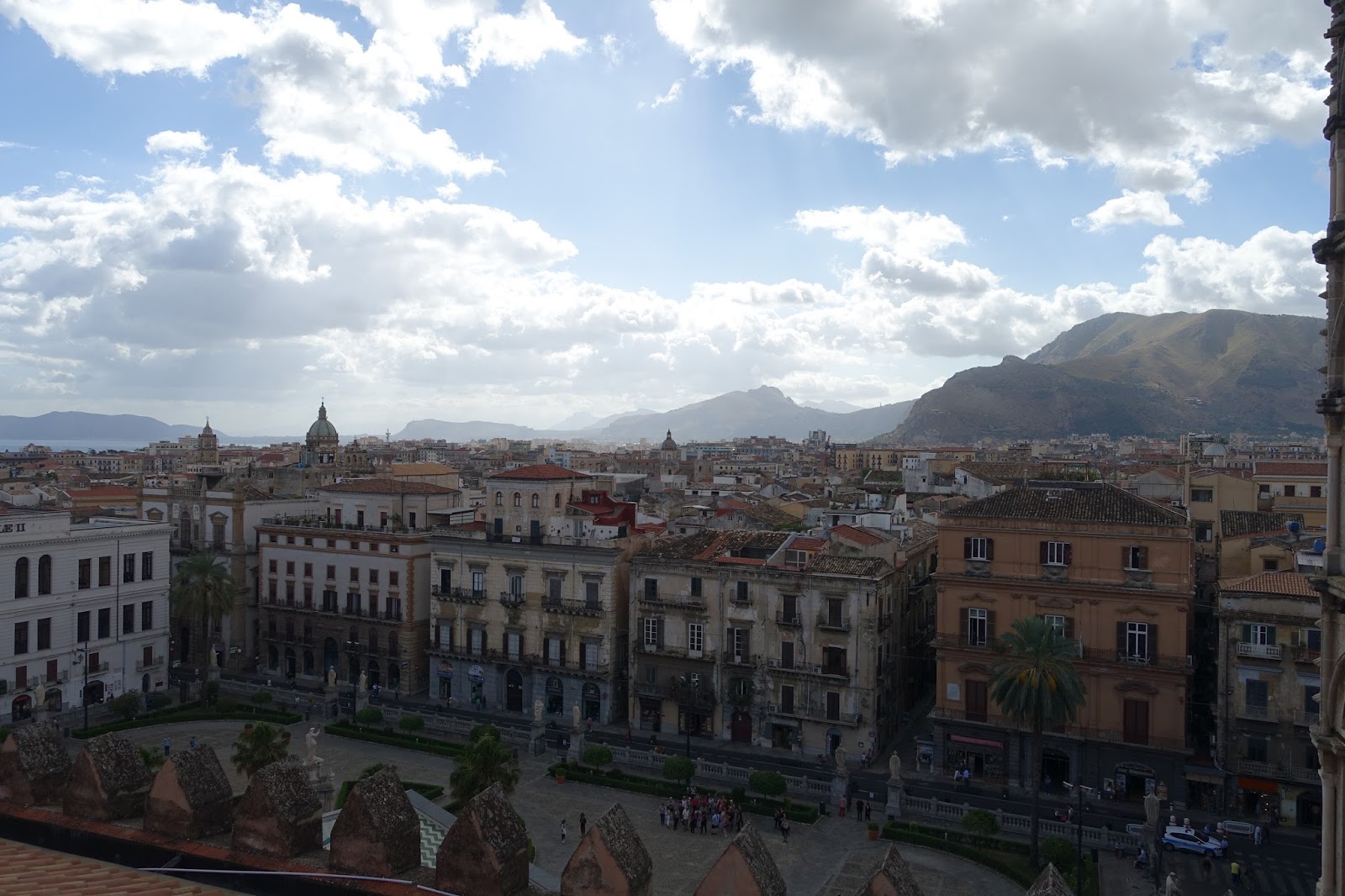
I have a wee bit of a problem with my Sicily blogging, which is that I took so many photos which I want to share, but then I have to break them up into separate posts so I'm not just posting like 50 photos at once, and then I have nothing really left to say about the photos. Maybe you like looking at photos better than reading what I have to say, in which case, you're in luck. Last time, I wrote about the inside of Palermo cathedral, and this time is me up on the roof. 

I definitely recommend the climb up to the roof if you get the chance and aren't scared of heights. It's one of the most memorable moments of a trip packed with beautiful sights. You can see across the city of Palermo to the sea and the mountains. At least on the day I was there, the mountains were beautifully dappled in the mid-morning light. It had rained a tiny bit before I went up, but the sun came back out and the conditions were pretty much perfect to enjoy the view. 


Thursday, October 27, 2016

Day 3 continued: Palermo cathedral

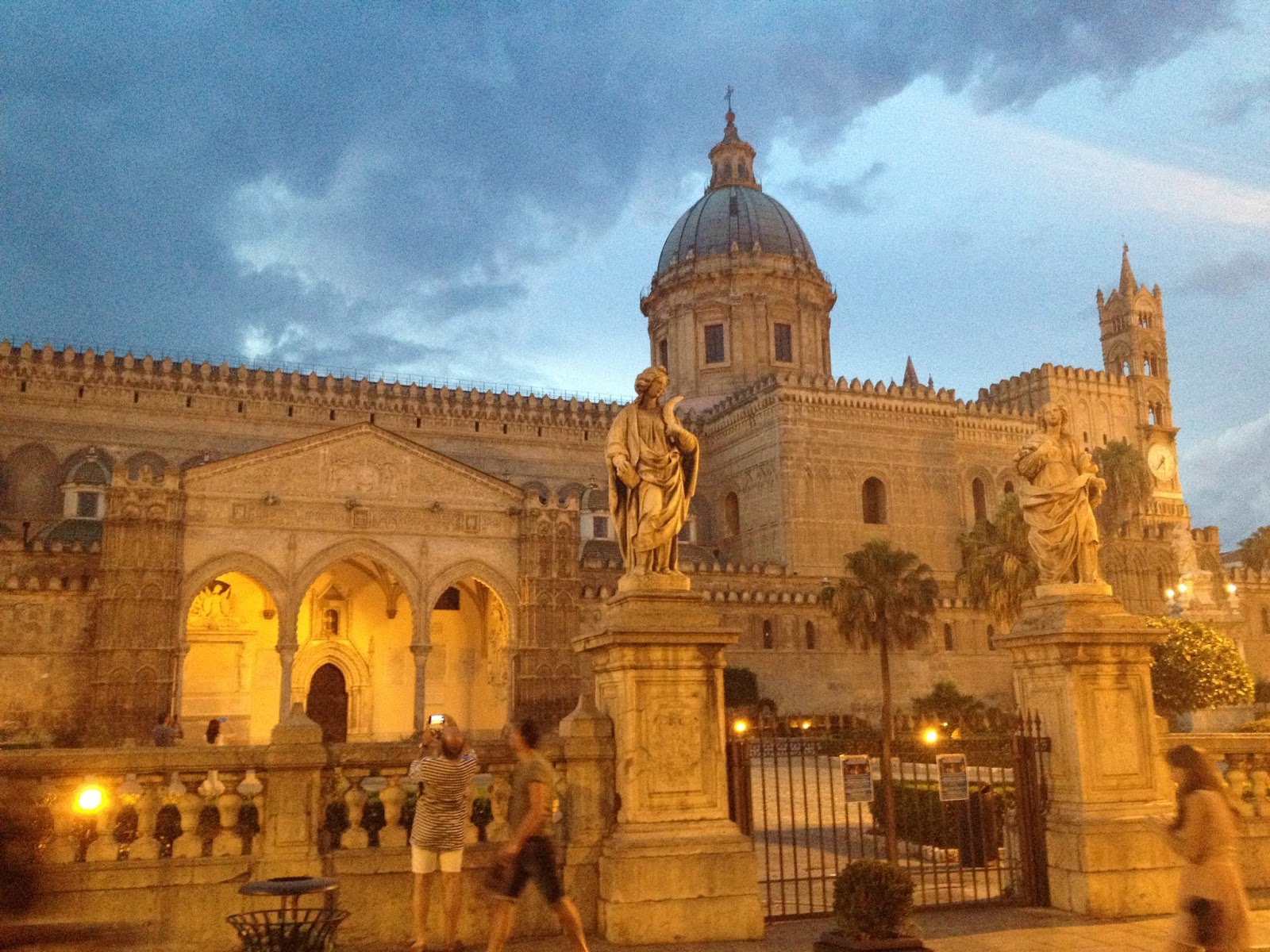
My first visit to the cathedral was actually on the second day of my trip, when I decided to turn a different way at the Quattro Canti crossroads for a pre-dinner stroll and unexpectedly stumbled upon the cathedral at dusk. It dates back to Norman times, with substantial additions and alterations over the ages, and was quite a treat to behold in the soft evening light.


With a loud bang which made me jump, they set off a flare in the cathedral grounds as night set in. I was somewhat alarmed on day one, when I left my hostel to a chorus of what sounded like gunfire. But it turned out they have an inordinate love for fireworks in Siciliy - I often heard them going off in broad daylight, and nobody blinked an eye. Must be a way to tell the locals from the tourists, like the midday cannon in Nice.

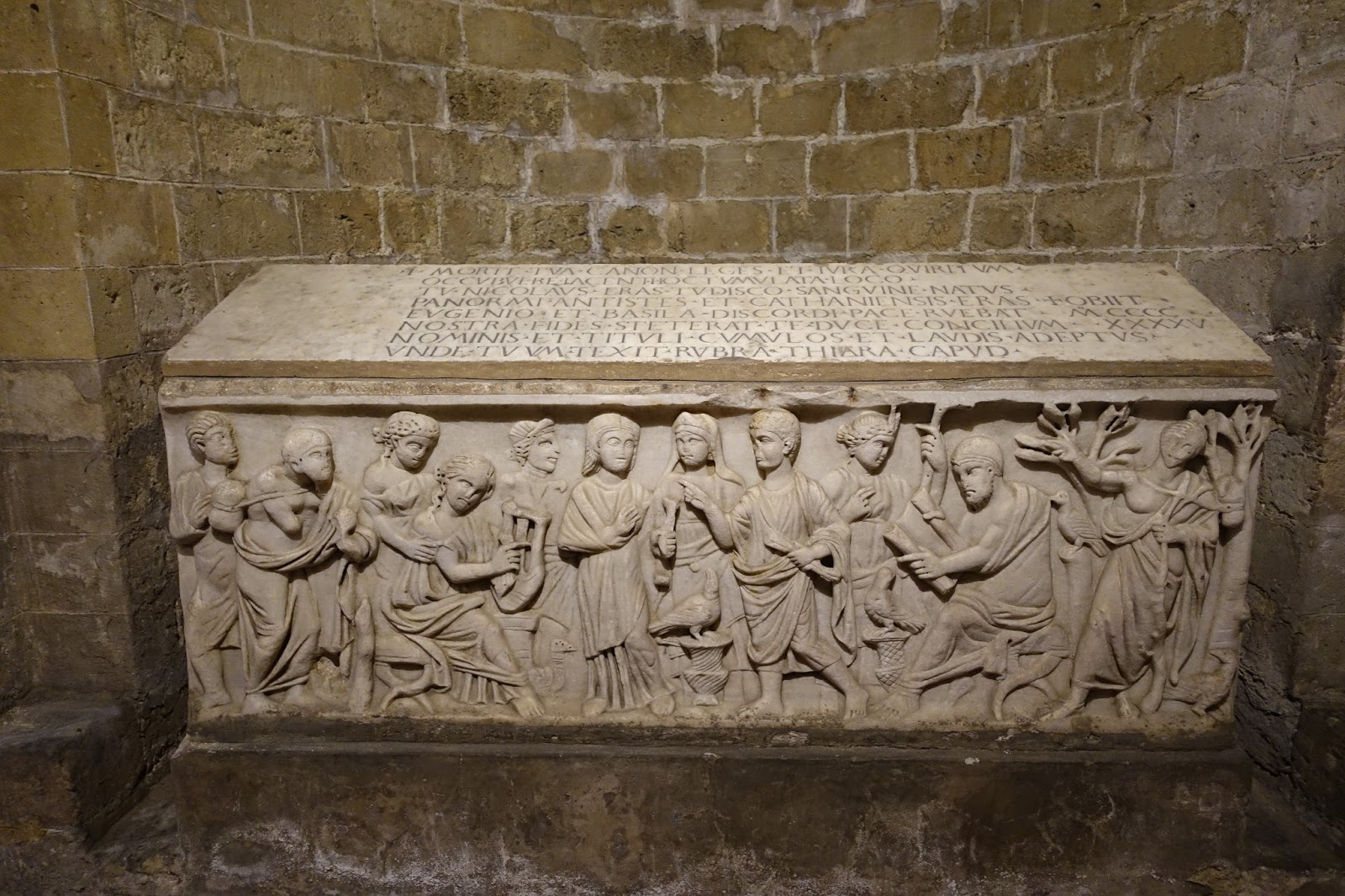
Because of my early start to see the Palatine Chapel, it was still only mid-morning by the time I left the Norman Palace and headed to the cathedral on day three of my trip. Entrance to the cathedral is free (and it was consequently flooded with cruise ship groups by the time I departed), but to see something beyond the rather plain interior and flee to the bits of the cathedral the guided tours might not visit, you can pay for the deluxe experience. This involves seeing the royal Norman tombs (not many and not superlatively interesting), a small treasury/museum type bit, the crypt, which is Romanesque and atmospheric and full of tombs dating from the Roman, Byzantine and Norman eras, and going up on to the roof. I think the 6 euro fee for all that is certainly worth it, but if you're pushed for time and not keen on old tombs, definitely just go up on the roof.

The cathedral entrance

Pretty, but not quite up to Palatine chapel standards of interior decoration

The crown of Constance of Sicily (1179-1222), found in her tomb in 1491, or in the 18th century, depending on what source you read. She was an Aragonese infanta, then Queen of Hungary, before becoming , as the wife of Frederick II, Queen of Germany and Sicily and Holy Roman Empress. She had to flee Hungary after the death of her husband and married King Freddy when she was 30 and he was only 14. Quite the life!
Tombs in the crypt. Many looked like older Roman tombs had been re-purposed for Christian burials.


Silver-ceilinged chapel
Tomb of Queen Constance, another repurposed Roman one

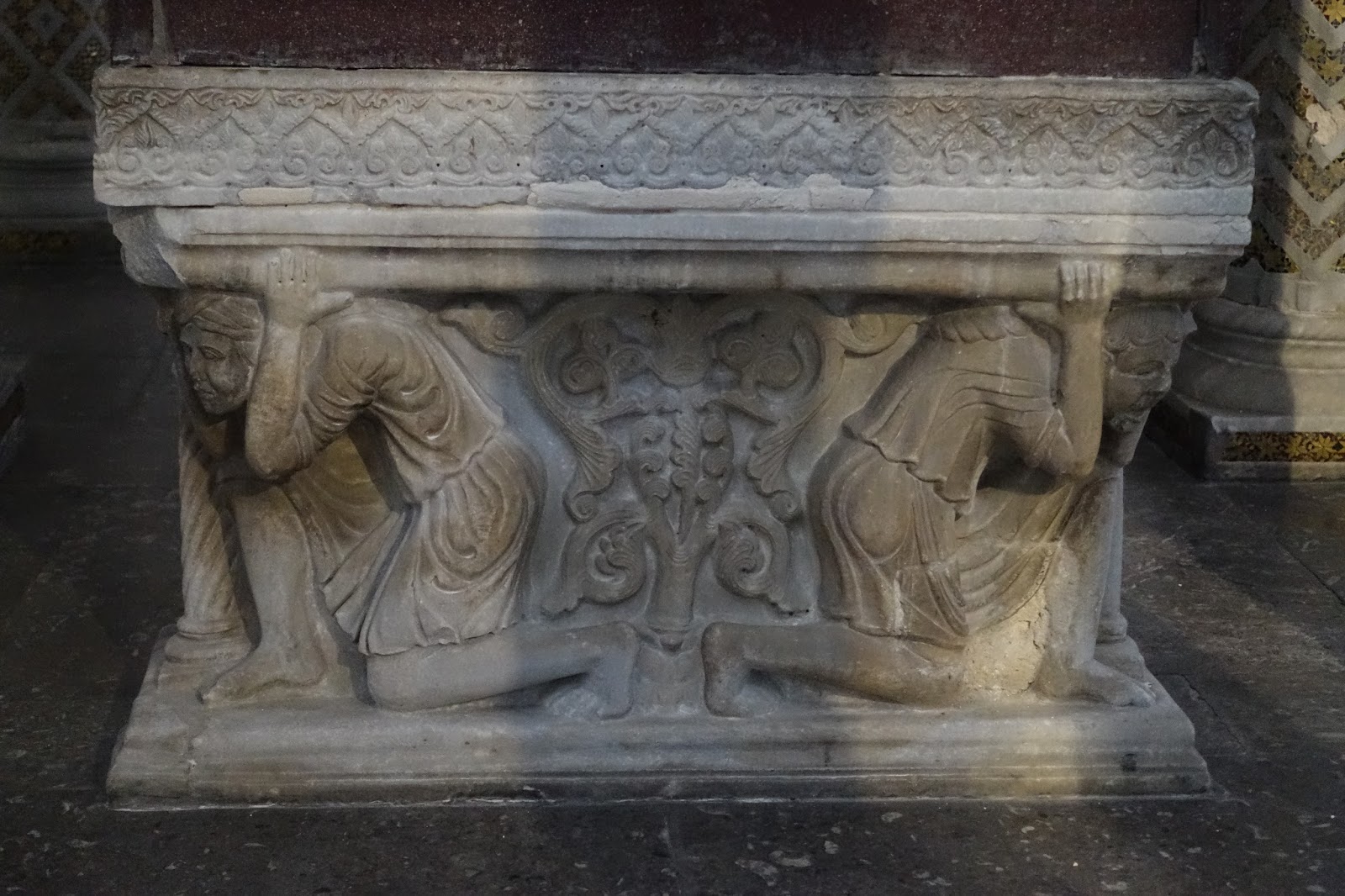
Detail of Constance's tomb


Tomb of Roger II, first Norman King of Sicily
Detail of Roger's tomb


A meridian line runs North-South through the cathedral. Each end marks the position of the sun at the summer and winter solstices, as it shines from a pinhole camera at 12 noon. The signs of the zodiac in between show the position of the sun at different times of the year. I meant to get a better photo of this, but I went up on the roof and when I came back the place was stuffed with tourists
Behold the milling tour groups